A business idea
Everyday essentials, without the endless aisle
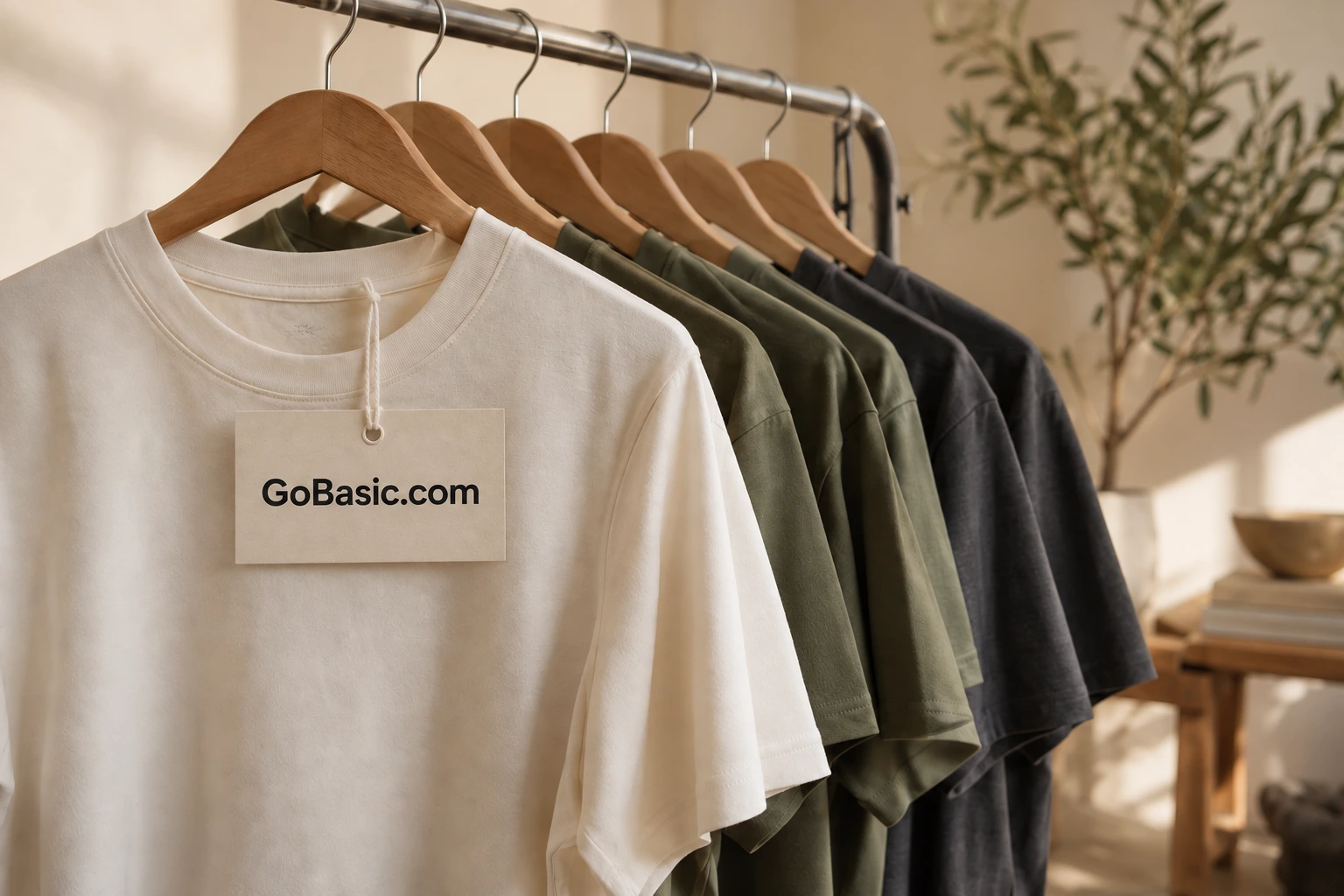
A useful everyday clothing store starts with a repeatable morning. Someone opens a drawer, chooses a shirt that fits as expected, and gets on with the day. That is a more specific starting point than launching a lifestyle brand for everyone. GoBasic.com could suit a clothing business built around a small, dependable collection and the information people need to buy it confidently.
This is an illustrative business concept for a future owner of the domain. The first customer might be someone replacing worn everyday clothes, or a person building a manageable wardrobe for a new routine. Those customers have different shopping habits, so choose one group for the first assortment. A founder could begin with commuters who want comfortable layers for a casual workplace, then test the actual garments with people in that group.
Start with one dependable outfit
A reasonable first offer would be a short sleeve tee, a long sleeve layer, and a simple trouser. Treat that as a proposed outfit to test, rather than a final buying order. Ask customers which piece they would purchase first, what they already own, and which fit problems stop them buying online. If trousers produce a long list of unresolved requirements, launch the tops first and keep working on the trouser sample.
Keep a written reason for every color and cut. A dark tee might serve everyday wear, while a lighter option has a different layering role. A third almost identical neutral needs a customer reason. Fit is another matter: removing necessary sizing to make the catalog look smaller would undermine the offer. A focused collection can still make room for meaningful differences in body shape and preference.
GoBasic.com fits this use because the invitation points toward the core wardrobe decision. The product pages would still need to establish material, construction, fit, and care. A name can introduce the idea; the garments and the service have to make it believable after the first order.
Make the fit information specific
A size label alone leaves too much interpretation to the customer. Publish a clear explanation of what each measurement describes, how it was taken, and how the garment is intended to sit. Body measurements and measurements of a finished garment answer different questions. For an example of that distinction, Nike’s men’s tops guide explicitly identifies its chart as body measurements and explains how to measure. Its numbers apply to Nike’s products, not to a new collection.
For this proposed store, a fit page could show the garment laid flat beside a simple diagram. A customer who likes the length of a shirt already in their drawer could compare it with the new product. Model measurements and the size worn can add context, provided the information is accurate. Explain the intended fit in familiar words, then support those words with measurements rather than treating “relaxed” as a complete description.
Create one record for every sample revision. If a supplier changes the sleeve opening, update the product information before shipping the changed garment. Returning customers should be able to tell if the item they liked last time has changed. For this essentials store, repeat buyers need to recognize the item they ordered before.
Treat care as part of the offer
Before choosing a fabric, decide how the intended customer is likely to wash and store the clothing. Ask the supplier for supported care information and test samples through that routine. The FTC’s care labeling guidance is a starting point for reviewing U.S. apparel labeling requirements with the responsible supplier or adviser. It is not a substitute for checking the requirements that apply to the actual products and market.
A useful product page would put the relevant care instructions near the material description. Someone comparing two tees may care about drying and ironing as much as color. Keep claims such as shrink resistance tied to actual evidence. A wash test should record the sample, process, and measurements before and after, so a product decision rests on something more reliable than how the fabric felt when it arrived.
Find buyers through a visible routine
One possible distribution path is a series of short wardrobe demonstrations for the chosen customer group. Show the same pieces worn across a normal week, with close views of the fabric and practical fit notes. Invite interested viewers to a small fitting session or a sample feedback list. The content should help people decide if the clothes suit them before it asks them to purchase.
A local coworking community could be a useful place to recruit early testers if the initial audience is casual office workers. Ask permission to share the invitation, explain what participation involves, and avoid turning feedback into a promotional testimonial without consent. The purpose of the first sessions is to find mistakes while the collection can still change.
Plan the second purchase now
A replenishment model depends on supply discipline. Keep stable product identifiers, maintain the size chart, and record when a fabric or fit changes. Offer customers a way to find their previous item. Let repeat buying stay voluntary; a subscription would need a clear customer reason, such as an actual replenishment schedule, before becoming part of the offer.
The first operating worksheet should include sample cost, minimum order quantity, packaging, expected dispatch work, return handling, and the time needed to answer fit questions. Test the return process as carefully as the original order. If a customer orders the wrong size, the team should know who receives the package, how the garment is inspected, and how the replacement decision is communicated.
Before committing to inventory, put a small proposed assortment in front of prospective customers and ask them to build one outfit. Record missing sizes, confusing descriptions, and pieces they would never use. Those observations give the founder a concrete next purchasing decision. If this is the kind of focused clothing business you want to build, inquire about acquiring GoBasic.com and describe the collection you have in mind.
Make an inquiry about the domain.
Discuss acquiring GoBasic.com.