A business idea
A practical start for a first apartment
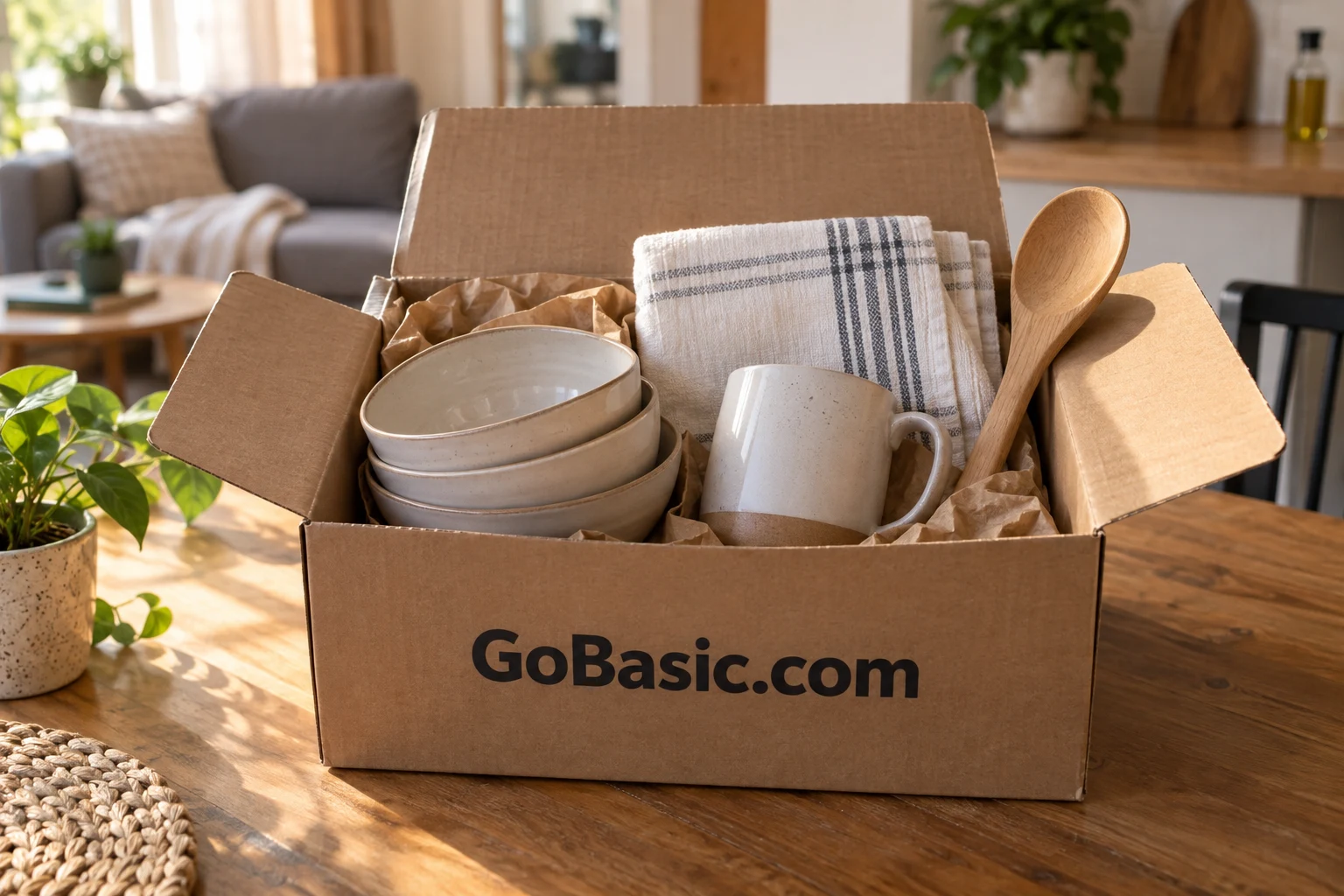
The first evening in a new apartment can expose small omissions very quickly. There may be a plate but no towel to dry it, or a bathroom full of boxes with no easy way to hang a shower curtain. A retailer could help by assembling useful groups of ordinary products around the first few days of living somewhere. GoBasic.com could introduce that offer with a clear emphasis on getting the essentials in place.
The retailer and bundles described here are an illustrative concept, not an existing business. Start with a specific customer: someone moving into their first unfurnished rental and buying most household basics themselves. A parent sending a practical gift is a possible second buyer, but the person opening the box should remain central to the product decisions.
Organize around the first task
Room names are useful navigation, but they are too broad to define a bundle. “Kitchen” could include everything from a dish brush to a refrigerator. A first offer called “Wash up after dinner” could include a brush, a pair of towels, and a compact drying option. The customer can immediately judge whether that job is already covered by things they own.
Build a second bundle only after the first one has a clear boundary. A bathroom arrival kit might have a separate set of compatibility questions, especially around fixtures and dimensions. Avoid merging everything into a giant move-in box simply because the products share a destination. A renter with limited storage may prefer to choose two small bundles and skip the items that came with the apartment.
The domain fits a retailer that takes those decisions seriously. The idea of going basic should show up in the contents list, the packaging, and the replacement options. A visually tidy bundle that includes several unnecessary objects would weaken the premise.
Show what fits, and what does not
Every item needs accurate dimensions. A drying rack can be compact in a photograph and still take up most of a small counter. A product page should show the usable footprint, any clearance it needs, and the dimensions of the space where it will sit. Include a photo with a recognizable scale reference, while keeping the numbers easy to find.
As a simple example of the information to collect, IKEA’s RINNIG towel page lists the towels as 18 by 24 inches and separately supplies packaging measurements. Those are different measurements serving different jobs. A bundle retailer would need its own confirmed specifications for the products it actually sources; the example is not a proposed supply agreement or endorsement.
Put compatibility questions before purchase. If a bundle contains something that depends on the apartment’s fittings, explain what the buyer should measure or check. Give an easy route to buy the remaining useful items separately. The customer should understand the contents before ordering and be able to use them after opening the box.
Build a box before setting the offer
Gather the actual products and pack a trial shipment. Measure the finished parcel, including protective material, and weigh it. A group of lightweight goods can still fill a large carton. UPS explains dimensional weight as a way shipping charges can reflect the space a package occupies relative to its weight. Use the current service and route when checking a quote, rather than assuming the lightest bundle is the cheapest to send.
A practical packing test should answer a few ordinary questions. Can a customer lift the box comfortably? Does a hard item damage a textile in transit? Can the contents survive the journey with less packaging? What happens if one component is unavailable? Record the packing order and photograph the completed parcel so the next shipment uses the same method.
For an initial trial, choose a delivery area the team can actually support. A local delivery test may reveal handoff problems and packaging issues, but it does not prove a nationwide parcel model. Keep those results separate. Before expanding, send representative boxes through the intended service and inspect what reaches the recipient.
Explain the bundle in plain inventory terms
The main image can show the products together, but the contents list should count them. State “two dish towels” rather than “kitchen textiles.” Show the individual items as well as the group. If a color can vary, explain that before the customer orders and decide whether variation is acceptable for the offer.
One useful worked example is a renter who already owns plates and cutlery but has nothing for washing up. That person should find the relevant bundle, check the counter space, see every included item, and understand the delivery arrangement. A gift buyer should have a way to send the same useful box without guessing the renter’s decorative taste.
The retailer would need supplier records, quality checks, stock counts, packing instructions, and a plan for damaged or missing parts. Selling a bundle does not remove the need to track each component. If one brush is faulty, replacing that brush should be possible without asking the customer to return a whole box of useful goods.
Reach people near the move
A credible first distribution route is practical moving content shared with local rental communities, university housing groups, or relocation services that permit it. A checklist for the first evening can introduce the product without claiming every renter needs the same things. Show which purchases can wait, and invite people to cross off what they already have.
Ask recent renters to walk through their first week rather than asking if they like the bundle. What did they borrow? What did they buy twice? Which item took up space without being used? With permission, compare their receipts and their actual cupboards. These concrete observations are more useful than a general preference for minimal design.
The next step is to interview a small group of renters and pack one proposed bundle based on what they describe. Let them remove items, flag dimensions, and explain their delivery constraints. Revise the offer before expanding into another room. To explore the domain for this kind of practical retail concept, send an inquiry about GoBasic.com with a short description of the customer you would serve.
Make an inquiry about the domain.
Discuss acquiring GoBasic.com.